
On 26 January 2026, the World Meteorological Organization (WMO), the United Nations Development Programme (UNDP), and the United Nations Economic Commission for Europe (UNECE) co-hosted a side event at the 2026 ECOSOC Partnership Forum focused on strengthening the digital–energy nexus through data, artificial intelligence (AI), and innovation. Held on the International Day of Clean Energy, the event convened policymakers, practitioners, researchers, and development partners to explore how digitalization can accelerate a just and inclusive energy transition, enhance climate resilience, and unlock sustainable finance, particularly in regions undergoing rapid transformation.
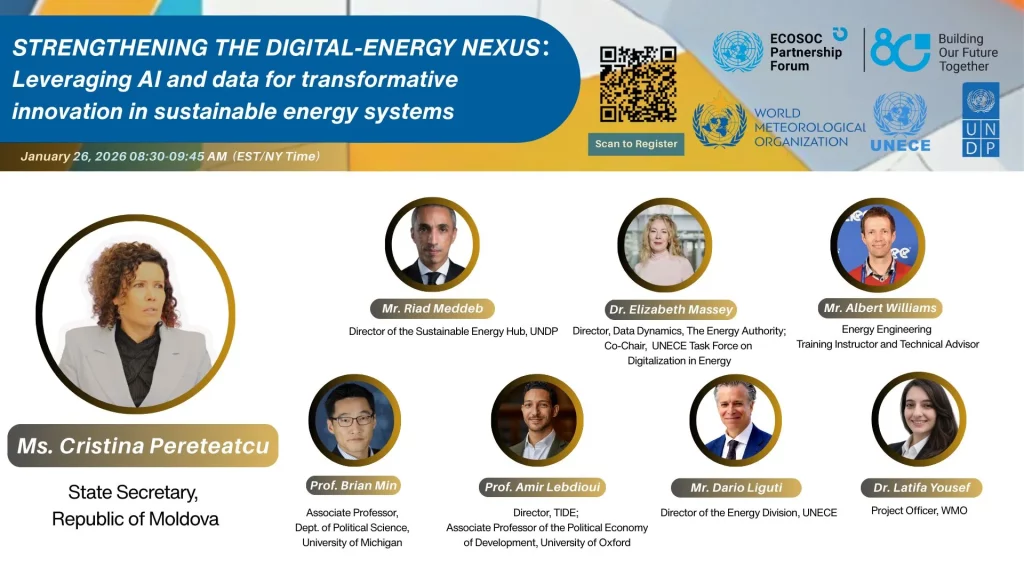
Opening the session, Mr. Dario Liguti, Director of the Sustainable Energy Division at UNECE, framed the discussion around the growing interdependence between energy systems and digital technologies, noting that AI is reshaping both how energy is produced and consumed, and how it is planned and financed. He emphasized that digital innovation must be understood across the full energy-system value chain, from data generation and modelling to policy design, investment mobilization, and project implementation.
This framing was reinforced by Ms. Cristina Pereteatcu, State Secretary of the Republic of Moldova, who shared Moldova’s experience in advancing energy sector digitalization as a strategic necessity rather than a future aspiration. As a small and highly interconnected energy system exposed to price volatility, climate risks, and infrastructure constraints, Moldova has placed digital transformation at the core of its energy reform agenda. She highlighted recent steps including the adoption of a national digital transformation programme for the energy sector, the development of interoperable data platforms, regulatory sandboxes for innovation, and strengthened cybersecurity frameworks. These efforts, she noted, are critical to improving renewable integration, reducing system losses, enhancing transparency, and building investor confidence, while ensuring that digitalization supports a just and inclusive transition.
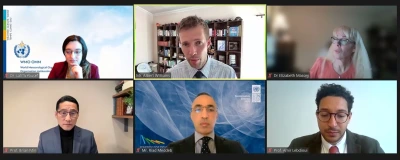
The panel discussion was moderated by Dr. Latifa Yousef, Project Officer for Climate and Energy at WMO, and brought together a diverse group of experts spanning energy systems, data and AI, governance, and development economics. Panelists included Dr. Elizabeth Massey, Director of Data Dynamics at The Energy Authority and Co-Chair of the UNECE Task Force on Digitalization in Energy; Mr. Albert Williams, Energy Engineering Training Instructor and Technical Advisor; Prof. Brian Min, Associate Professor of Political Science at the University of Michigan; and Prof. Amir Lebdioui, Director of the Technology and Industrialization for Development Centre at Oxford TIDE.
Discussions underscored that digitalization is not simply about deploying new technologies, but about integrating data, institutions, and people to enable resilient and investable energy systems. Dr. Massey emphasized the importance of interoperable, high-quality data and sustained system ownership to modernize legacy grids and support decision-making under increasing climate stress. She noted that without strong data governance, AI-enabled systems risk underperforming or reinforcing existing vulnerabilities.
From an operational and end-user perspective, Mr. Williams highlighted how reliable weather and climate data directly improve energy efficiency outcomes. He explained how climate-informed forecasting supports demand management, peak load reduction, renewable integration, and predictive maintenance, while also strengthening measurement and verification of energy savings—an essential component for reducing risk and strengthening project bankability. He also emphasized the critical role of training and skills development to ensure that digital tools translate into real efficiency gains on the ground.
Prof. Min brought a governance and political economy lens to the discussion, stressing that data transparency and AI-enabled planning can fundamentally change how energy progress is measured and prioritized. By illuminating underserved areas and making system performance visible, digital tools can help build trust, improve accountability, and shift policy focus from narrow access metrics toward broader development outcomes. He argued for rethinking energy poverty not only in terms of access, but in terms of how energy affordability and reliability enable economic opportunity, resilience, and long-term development.
Reflecting on longer-term transformation, Prof. Lebdioui examined the interaction between the clean energy transition, the digital and AI transition, and green industrialization. He cautioned that digitalization can either reinforce existing inequalities or become a powerful catalyst for inclusive development, depending on policy choices, institutional capacity, and international coordination. He highlighted the importance of green industrial policy, technological foresight, and cross-ministerial coordination to ensure that digital innovation supports national development priorities and climate goals.
In his closing remarks, Mr. Riad Meddeb, Director of the Sustainable Energy Hub at UNDP, emphasized that digitalization and AI must ultimately be judged by their ability to deliver real development impact. He stressed the need to move from innovation to implementation through strong partnerships, inclusive financing, and coordinated action across institutions, ensuring that digital energy solutions expand access to affordable, reliable, and clean energy for people and communities.
In her post-event reflection on the outcomes of the discussions, Ms. Roberta Boscolo, Head of the Climate and Energy Unit at WMO, noted that “digitalization and AI can only deliver real value for the energy transition if they are grounded in authoritative, high-quality climate and weather data. WMO’s role is to ensure that trusted observations, forecasts and climate information are accessible and interoperable, so they can be effectively integrated into energy planning, operations and investment decisions.” She emphasized that strengthening the link between WMO-coordinated data systems and national energy and digital platforms is essential to scaling climate-resilient, efficient and investable energy solutions.
Key takeaways
• Climate data strengthens bankability: High-quality weather and climate information reduces operational risk, improves efficiency, and enhances investor and financier confidence.
• Digitalization is a system enabler: Integrated data, AI, and climate intelligence can improve grid resilience, renewable integration, and long-term energy planning when embedded across the full value chain.
• Governance and skills are critical: Institutional coordination, data transparency, and workforce training are essential to translate innovation into impact.
• Equity must remain central: Digital energy solutions should expand opportunity, strengthen local economies, and avoid reinforcing existing inequalities.
• Partnerships drive scale: Coordinated action across UN entities, governments, finance, academia, and industry is key to delivering progress toward SDGs 7, 9, 11, and 17.