Click here to watch the event recording
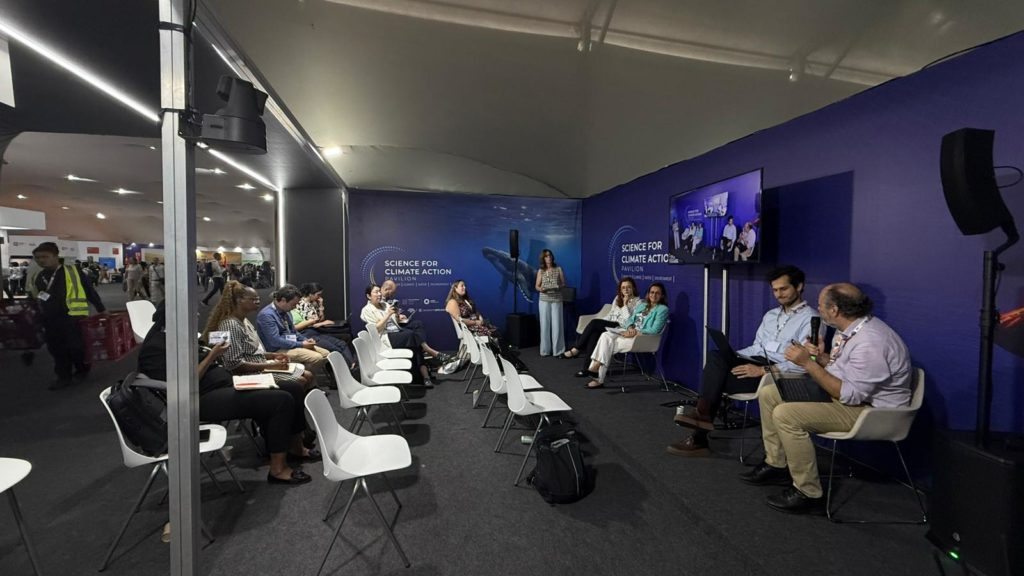
At COP 30, the World Meteorological Organization (WMO) convened experts, policymakers, and youth leaders for a high-level side event titled “Climate Data to Action: Enhancing Clean Energy Resilience and Mitigation.” Held at the Science for Climate Action Pavilion in the Blue Zone, the 70-minute session showcased how weather and climate information can accelerate a resilient and secure clean energy transition.
Introducing the event, Danfeng Zhu, Founder of The Climate Voice Network, emphasized the urgency of integrating climate science into energy planning. As heatwaves, droughts, and shifting wind and rainfall patterns increasingly disrupt power systems, she underscored the critical contribution of energy meteorology in strengthening the reliability of renewable energy.
Pic courtesy: Danfeng Zhu
The session began with recorded opening remarks from Ko Barrett, WMO Deputy Secretary-General, and Gauri Singh, Deputy Director-General of the International Renewable Energy Agency (IRENA). Both leaders highlighted the growing need for climate services that help countries anticipate risks, guide investment, and design robust clean energy systems that can withstand increasing climate volatility.
The keynote address was delivered online by Alberto Troccoli, Co-founder and CEO of Inside Climate Service, Managing Director of the World Energy & Meteorology Council, and Chair of the WMO Study Group on Renewable Energy Transition. His presentation, “When Weather Shapes Power: 2024 Insights on Climate Impacts to Global Energy Systems,” illustrated how year-to-year variations in wind, solar radiation, temperature, and hydrology already have tangible impacts on electricity generation and demand worldwide. Welcoming his insights, Zhu noted that weather and climate have become core design parameters for energy planning and risk management, and are no longer background considerations.
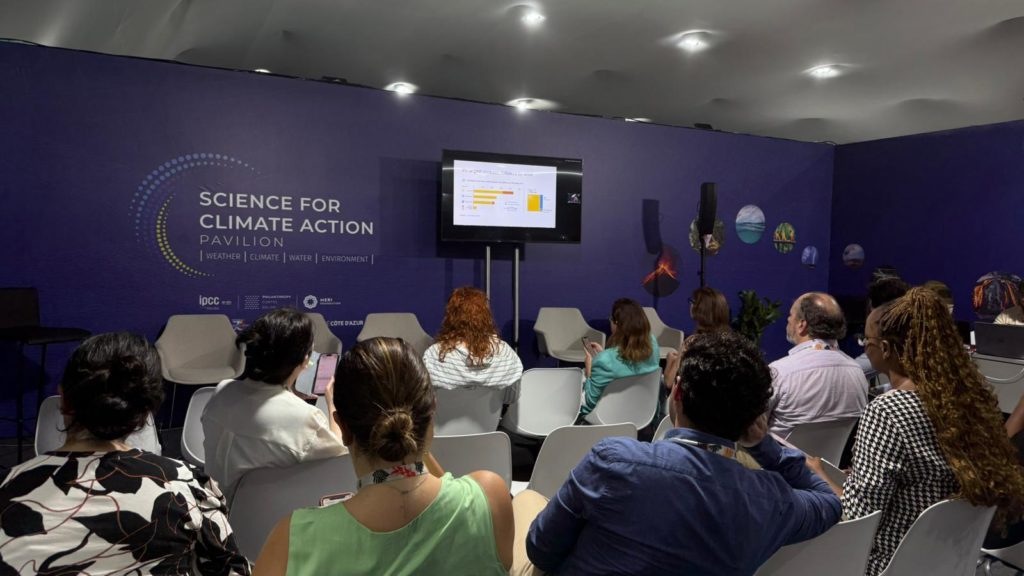
A dynamic panel discussion, moderated by Sylvie Goyet, Deputy Coordinator/Head of Environmental Activities at the Organization for Security and Co-operation in Europe (OSCE), explored the implications of the newly released 2024 WMO–IRENA Year in Review from scientific, policy, and operational perspectives. Panelists included:
- Virginie Schwarz, President & CEO, Météo France
- Keywan Riahi, Director of ECE Program, International Institute for Applied Systems Analysis (IIASA)
- Elena-Alexandra Miron, 2025 Clean Air Task Force Fellow & Researcher
- José Ignacio Martínez Echenique, Multilateral Policy Officer, International Energy Agency (IEA)
- Vincent-Henri Peuch, Head of Site in Bonn (Germany), European Centre for Medium-Range Weather Forecasts (ECMWF)
- Imen Gherboudj, Team lead, International Renewable Energy Agency (IRENA)
Discussions focused on how national meteorological services can better support evolving energy sector needs, the potential of young professionals to accelerate resilience and inclusiveness in energy transitions, advances in seasonal forecasting at ECMWF, and how global modeling and policy frameworks must adapt to reflect real-world climate variability. Panelists also emphasized the importance of embedding climate-risk assessment into investment and Nationally Determined Contributions (NDCs), particularly as countries move from commitments made at COP28 toward implementation pathways at COP30 and beyond.

From left to right: Elena-Alexandra Miron, Sylvie Goyet, Virginie Schwarz, José Ignacio Martínez Echenique, Danfeng Zhu
Roberta Boscolo, Head of Climate and Energy at WMO, who delivered the closing remarks, called for a sustained partnership between scientific institutions, governments, multilateral agencies, and the private sector. She affirmed that climate data is the foundation of resilient clean energy and urged continued collaboration to ensure that climate services effectively support national transitions toward secure, affordable, and low-carbon power systems.
As the session concluded, participants echoed a shared message: turning climate science into actionable energy decisions is essential for safeguarding global progress toward net-zero. WMO reaffirmed its commitment to advancing climate services that enable countries to weather the transition and build a sustainable energy future.